Trickling of Flavors
Every culture in Asia has its own unique preferences and traditions, and the flavors I and many others grew up with are now spreading across the States. To see the same flavors that have been with me throughout my entire life, even when I lived in China, was a huge comfort.
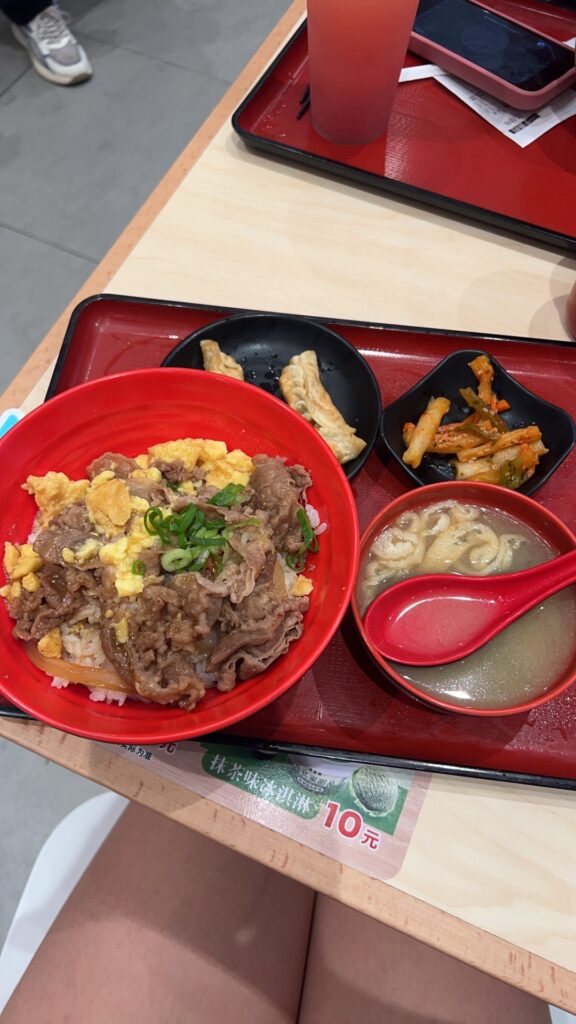
I remember coming across a small restaurant in the Chinatown area of Los Angeles with my cousins that I would have ignored in any other scenario, had I not been as voraciously hungry as I was. It was a nondescript shop with a sign that said “Shanghai Cuisine.” If you’ve been on the Chinese side of TikTok, you might have heard of the idea that if you enter a Chinese restaurant and hear shouting, see a kid working on homework on one of the tables, and feel a generally unpleasant atmosphere, then it is bound to be as authentic as you can get in the States. This restaurant checked all the boxes- and more.
I walked in. The particular aroma of dim sum and the sight of circular tables covered with yellowing table cloths greeted me. When I dug into my order, home has never felt closer.
But I also think it’s important to note that true “authenticity” isn’t about what the outside looks like. It’s about what you make it to be. I personally love myself some Americanized Chinese food, as appalling as that might sound. Long live orange chicken.
Bits of Home
My aunt, who permanently stays in Japan with her grandson, can usually be seen on the couch in her living room, watching live streams on her beige-colored iPad. It’s not often I see her, yet that sight always brings a smile to my face. Her usual feed is populated by fruit and vegetable sellers, (she’s a health fanatic), dancing videos, and the like.
In China, the main method of buying pretty much anything is through this app called “TaoBao.” Every year when I visit China, I always splurge a little on TaoBao, buying all sorts of clothes or strange gadgets. On the app, there are live streams where vendors sell their products ot a watching audience. Typically, these live streams come with huge discounts that can hack off fifty percent of an item’s value. As such, they are massively popular in China. There’s this one livestreamer who can sell millions (in USD!) in a single day just from selling cheap products.
When TikTok started getting popular in China, live streaming also entered the American social media world of shopping as well. Just recently, I’ve noticed this huge increase in people selling items through streaming, especially on TikTok. It’s nice to see a little bit of home everywhere I go.
Fanon and Confinement of Asian Culture
Frantz Fanon is a renowned philosopher known for his work on decolonization and racism. His description of the objectification of colonized cultures is reminiscent of cultural appropriation of Asian cultures, indicating the intrinsically tyrannical nature of colonization and the confinement of Asian cultures into stereotypes. In Franz Fanon’s work Racism and Culture, which portrays the dehumanizing elements of racism and its consequences, Fanon expresses how native populations are objectified by colonizers, explaining how colonizers who “constantly [affirm] concern with ‘respecting the culture of the native populations’ accordingly does not signify taking into consideration the values borne by the culture, incarnated by men. Rather this behavior betrays a determination to objectify, to confine, to imprison, to harden… I can think of gestures and thoughts that define these men.”
Fanon’s idea of cultural confinement reminds one of stereotypes enforced upon Asian individuals, wherein general opinion of Asian countries dictate their perception of every Asian individual. He articulates the confinement of a whole population and the ignorance of other cultures through his choice of words, such as the phrase “a determination to objectify” identifying with the ignorance of diversity in Asian culture in the West and the enforced stereotypes on Asian individuals. The need to exert control over cultures without taking into account the “values borne by the culture” indicates the tyrannical goal of colonization to implement and solidify their own impressions, disregarding genuine cultural values. The cultural appropriation of Asian clothing and art forms aligns with this notion, where foreigners believe it is in their right to classify Asian traditions within their own ignorant perceptions. Fanon’s idea that colonizers believe there are “gestures and thoughts than define these men” indicates the perpetual objectification of culture, reduced to a singular, one-dimensional identity whose facets are dictated by foreign perceptions, unreflective of true values in culture. Ultimately this relates to Western stereotypes of Asian culture, such as the model minority, in which every Asian identifying individual is classified as successful, obscuring the genuine challenges and nuances within Asian cultures. This leads us to ponder whether or not cultural appropriation in general is a direct consequence of colonization, or if fetishization of “exotic cultures” is also caused by colonization?
The Taste of Crabs
This photo above shows me holding up a crab from the store that we buy all of our seafood from. My dad staunchly refuses to buy seafood from anywhere else- whether it be Costco’s or even the Asian supermarkets populating Washington, he insists that this is where the real deal is.
Before immigrating to the US, I lived in Nanjing in the Jiangsu Province of China. A speciality of that area is the “hairy crab,” a truly unmatched delicacy only available during winter seasons. My family would frequently tempt me with visions of its wonderful taste, boasting that nothing in the United States could ever come close to authentic hairy crabs. The delicacies in the States are nothing compared to the specialties of Chinese food, they would argue. Not even cheesy pepperoni pizza.
And yet, the seafood we buy from this place, as described by my dad, “rivals the crabs we have at home.” I think a common misconception that immigrants like me have is the idea that we are never at home. We face struggles regularly in school, in the workplace, never feeling like we truly fit in. But I think that it is important to have solidarity; we are all in this together. Regardless of where we are, home always lingers with us, just like how the taste of crab does for me.
Gentrification of San Francisco’s Chinatown
Gentrification has undoubtedly displaced and affected the operations and lives of many Chinese Americans and immigrants residing in San Francisco’s Chinatown district. But gentrification’s consequences are more rooted than just in the economic or physical change, but also in a deeper transformation of culture, authenticity, and heritage. Chinatown, historically, is a place of refuge for many Chinese Americans, symbolic of the community’s resistance and battles won. Such developmental plans erase the grueling work of Chinese immigrants in building this historic place, destroying a physical embodiment of culture and symbolism. Neighborhoods in San Francisco’s Chinatown are tied to immigrant community life, everyday cultural practices, and even the fascinating history of “bad” tongs in Chinatown; gentrifications threaten these cultural traditions.
Physical Presence
The most evident example of this erosion of culture is the notable decline in Chinese/Asian populations in San Francisco’s Chinatown, reducing a physical anchor of culture in the neighborhood. According to the Center for Community Innovation at the University of California, Berkeley, “Combined declines in family households, average household size and overcrowding are often associated with the process of gentrification, and changes in Chinatown’s racial/ethnic composition, further reinforce that possibility. Between 1990 and 2013 , the share of Asian households in the neighborhood decreased by 11 percentage points, corresponding with a growth of 5 percentage points in the share of white households” (Zuk and Chapple).
With fewer Chinese and Asian residents being able to call Chinatown home, the neighborhood faces a significant loss of the cultural identity that defined the community with the displacement of the very individuals that it thrived for. This demographic shift shows how in place of Asian residents, foreign, more wealthy white households have forced Asian Americans out, reflective of the larger societal emphasis on luxury development and modernization rather than preservation of culture and heritage. Elderly immigrants who have lived in Chinatown for decades find themselves displaced and forced to move out, leaving the social networks that surrounded them for most of their lives. This displacement interrupts an intergenerational sharing of culture, tradition, language, and customs that occur in Chinatowns and such interconnected communities. Where Chinese children once grew up in a cultural environment that gave them a diverse background in language and tradition, the same experiences are diminished, and Chinese individuals are less likely to observe traditional practices in their daily lives or be closer to their heritage.
Authenticity to Chinatown
This transitions nicely to authenticity and what that means for San Francisco’s Chinatown. Historically, the authenticity of Chinatown comes from the community’s collective experiences together; a shared struggle of adapting to a new landscape, of resisting decades of discrimination and exclusion, and living, working, and raising families within the small space of Chinatown. Authenticity is not defined by the popularity of restaurants and businesses, but what it means for the residents. Unfortunately, according to a survey for Chinese residents of San Francisco’s Chinatown, “Chinatown has become more prosperous and famous, physical Chinese-style features were maintained, particularly in and around several main streets. Yet, a closer examination, particularly referring to inhabitants’ perceptions, reveals that beneath the surface, the crowded streets and most remaining historic buildings simply provide empty shells for souvenirs and dining…most local touristic business is quite homogenous and insufficiently represents local history and culture….Worse still, the wellbeing of a vulnerable population is sacrificed. Along with the displacement of local businesses, residents’ daily lives, social bonds, and sense of belonging are interrupted, which leads to authenticity fading away and further generates a detrimental effect on social sustainability” (Xie and Batunova). This term of a “empty shells” rather than genuine cultural representation can be encapsulated as the “disneyfication” of Chinatown. What remains may look like Chinatown from the outside, but it functions as a stage for performance, rather than a genuine, authentic home. Restaurants may serve Chinese food, but they cater to non-Chinese palates and social media rather than its creators. This transformation represents a shift from authenticity rooted in generations of traditions to a performative authenticity meant to give foreigners a sense of “exoticness” within Chinatown.
Beyond an erasure of genuine authenticity in the modern era, we have seen similar changes made to San Francisco’s Chinatown in order to pander to foreigners in the past. When Orientalist stereotypes and views were at an all time high, and Chinatown was devastated after the 1960s earthquakes, developers who sought to rebuild created an idealistic, exotic image of Chinatown. They incorporated elaborate pagoda style roofs, dragon motifs, and other architectural designs that reflected Western fantasies of the “mysterious Orient” rather than the actual architectural traditions that the Chinese immigrants from the Guangdong province brought over. Because this community had little rights and support in the United States, many had to accept and even participate in the commodification of their culture. This historical precedent is just one example of the pattern of the West creating caricatures of Chinese culture and heritage. Even after this gentrification, as Chinese immigrants fight to take back Chinatown as a space for them without external forces forcing them to change, modern gentrification has continued to shape the neighborhood’s function by catering to what outsiders want to see, rather than by what the community needs or chooses.
Circle and Rectangular Tables
I grew up eating at circle tables. In both restaurants and in my home.
The best part about circle tables was the fact that you can talk to anyone. Unlike rectangular tables, which limited the amount of people you could talk to to only those sitting right next to you or across from you, circle tables allowed for easy access to just about anyone around the table.
It was obviously a bit jarring when I first came to the United States, aged around seven. Sitting in some fancy Italian restaurant, the first time I ever tasted pasta was at a rectangular table. I sat uncomfortably, surrounded by strangers with foreign faces, unable to see the familiar faces of my parents. I felt stranded, and the strange noodles did not necessarily help that fact.
Although I developed quite a fervent passion for spaghetti bolognese after this, I never managed to get completely used to these rectangular tables. In my house in California, we still used a small, circular wooden table to eat dinner. During my first few years officially going to elementary school in America, this feature of my house made me feel like I was back at home, in China.
Nowadays, it’s less obvious. Sure, I still sometimes felt like I preferred the more friendly and familial structure of circular tables, but comfortably sitting at these rectangular tables came as easy to me as breathing. This is just one of the many aspects of culture and tradition that drove and continues to drive a wedge between me and my peers in America. But when I reflect back upon the sheer culture shock I experienced during my first week in America, I feel light, because I have grown since then, grown to embrace both my culture and the new experiences and opportunities offered to me in America. But, I still think it was mostly the carbonara pasta that convinced me.
Language Barriers and Asian Immigrants
The only words I knew in English were “hello” and “oops,” when I first immigrated to the US. My parents, on the other hand, were rather proficient in English. It wasn’t the fact that we couldn’t understand English that made navigating this new world difficult, however.
Language barriers extend beyond simple knowledge of language. Cultural connotations in certain languages often create a rift between individuals from different cultures, who express emotions in different forms.
Growing up in China, large family gatherings were a normal, weekly occurrence. My aunts, uncles, cousins, nieces, and nephews sat in a circle around a circular table, feasting upon flavorful Chinese delicacies that could never be beaten by its Western renditions. These gatherings were often the highlights of my week as I laughed along with my cousins and chased each other across the restaurants.
It was always at the end of the dinners, however, that things took a turn. My cousins and I sensed a shift in the air, tensions rising as dinner edged to a close. It was the battle of deciding who pays the check.
In many Asian cultures, paying the check at the end of dinners is a sign of respect for the other person. In my family, it often evolved into a borderline brawl to decide who will pay the check. My uncle, fighting to pull out his wallet as my dad pulled his arms away from his pockets. Borderline screaming filled the room- if a bystander were to walk in, they would think that an violent argument ensued.
When I moved to America, I had no idea what “splitting the bill” meant. Gathering with a couple of American friends of ours, my parents often rushed to pay the entire bill, while our friends looked on in confusion. When my parents returned from paying they asked them, why not just split the bill?
Ultimately, this experience is only one of many other cultural differences between Asian individual sand American individuals. This unavoidable risk often leads to confusion, miscommunication, and sometimes conflict, if gestures that are normal in other cultures are perceived as rude and ignorant. Certain expressions in Chinese, for example, physically cannot be expressed in English, and vice versa.
I am privileged to having parents that were already quite fluent in English, as first-generation immigrants. But others in the same situation do not enjoy the same advantages. That is why it’s important to find solutions and spread awareness.
What can we do?
One of the most important factors is for individuals to understand the innate differences between cultures. Beyond just Asian communities, it’s important to spread awareness of the diversity and distinctions that define the cultures making up our world. Understanding these differences is the first step towards a more equitable and harmonizing society.
Schools implementing cultural affinity groups would be a great place for people to share about their different cultures and spread awareness.
AAPI in Technology
This week, I want to highlight some of the AAPI technology leaders that are the forefront of technology in the US. From Zoom (founded by Eric Yuan) to Nutanix and Instacart, AAPI entrepreneurs are creating innovative solutions and disrupting industries across the board.
In particular, Zoom, which blew up in popularity due to quarantine during the COVID-19 lockdown, has been such an integral part of my life in the recent years. I remember sitting down at my desk for hours at a time on a Zoom call, attending online school. Zoom was the reason I and many others were able to receive an education during these difficult times.
Speaking of the pandemic, the famously effective fabric of the N95 mask was developed by Peter Tsai , a Taiwanese American materials scientist. The N95 was the most recommended mask for preventing infection of COVID-19. These AAPI leaders’ innovation, among many others, helped so many individuals during the pandemic and challenging the way we work, live, and communicate.
However, I also think that it is vitally important to mention the challenges that AAPI entrepreneurs face despite their success. They often struggle with access to venture capital, and cultural barriers like the “model minority” stereotype can create added pressure. It’s important to consider representation in tech.
Representation Matters
Representation in tech is critical—not just for visibility, but to inspire the next generation of AAPI innovators. As more AAPI entrepreneurs rise to the top, they pave the way for young people to follow their lead, encouraging diversity and inclusion in the startup world.
Moreover, we need to prevent ignorant assumptions from influencing our judgement of other people. Understanding our own personal biases is vital to doing so.
The future is bright for AAPI entrepreneurs in tech. Innovation and diversity are the future of the tech industry, and AAPI entrepreneurs are leading the charge!
The Glass Ceiling
What is glass ceiling for Asian Americans?
The term glass ceiling refers to the barriers that face Asian American women and men in the workforce. Sometimes, instead of “glass ceiling”, it is called “bamboo ceiling.” This metaphor describes the difficulties that they face with breaking into higher levels of leadership or influence in a company.
While Asians may be well-represented across the various levels of the general workforce, there is a noticeable lack of Asian executives in American companies. The reason for why these barriers occur are not evident- but they are outstanding and prevalent problems that point to deeply ingrained systemic challenges that hinder Asian Americans in the workforce. These obstacles, in particular, affect Asian women the most.
Lack of Representation
According to a study done on AAPI representation in the American corporate workforce, only 1 in 285 Asian Women is in a high level of leadership at a company, while there 1 in 118 of the general workforce is an executive. This striking disparity indicates the severe lack of representation of Asian women, and the need to bridge both the gender and race gap in corporate leadership.
Ascend Research’s Executive Parity Index measures the percentage of executives within corporate professionals by race and gender, illuminating the disparities that are present in American companies. Their research indicates that AAPI women place second to last in terms of representation, while AAPI men place fourth to last. This research shows the heavy discrimination that Asian Americans, espiecially women, face in the work force. According to NPR,
Asian women are especially underrepresented. Out of all the Asian-American women working in tech, only 1 in 285 is an executive. That compares to a ratio of 1 executive per 118 professionals in the workforce as a whole — and, for white men in tech, a ratio of 1 in 87, reports Ascend.
The percentage of AAPI in general workforce is actually much higher than other people of color- however, their part as executives and managers are sparse. It’s important to understand why even though so many Asians are part of the American workforce, many of them are not promoted to higher levels of leadership and influence in companies.
Work and Culture
Jane Hyun’s book “Breaking the Bamboo Ceiling” directs us to one of the main reasons why Asian Americans are overlooked in the workforce: culture.
Japanese work culture
In Japan, the work culture is almost completely different. According to the Japan Times, 1 in 4 Japanese companies revealed that some employees would work 80-100 hour weeks with unpaid overtime. The corporate world of Japan is symbolized by the exhausted and tired “salaryman,” donning a black suit and bags under his eyes. There’s even a term for death by overworking, “karoshi“.
This hard working mindset is a fundamental part of Japanese culture, built up over the years and embedded within Japan itself. Employees are taught to respect the hierarchy in the company, to treat their seniors with absolute loyalty and obedience. Taking time off is frowned upon, and some individuals are even shamed for missing work due to sickness. These workforce traditions are unique to Japan and often considered outlandish and perplexing to foreigners.
This demonstrates the rift that differing work cultures can cause between Japanese employees and American employees. The contrast between these two corporate cultures are so pronounced that it’s hard to combine the two together. These innate traits of deference to elders in Japan, for example, may be perceived by Americans as “aloofness, arrogance, and inattention.” As such, when Japanese immigrants or individuals from Japanese families in America find work, they often face difficulties communicating and adjusting to this distinct environment. This extends to other cultures as well. Among numerous Asian communities, Koreans, who are also known for their strict work ethic, would likely face similar issues that plague Japanese immigrants as well.
The bamboo ceiling for Asian Americans happens when “the messages about success they learned at home conflict with the definition of success in the workplace,” according to writer Wesley Yang. Author Jane Hyun also notes that Asian families are traditionally adverse toward showing off one’s skills and accomplishments, which is necessary for leadership rules.
How can we help Asian Americans affected by the glass ceiling in the workforce?
A big resource that we can provide is guidance for AAPI individuals to self promote, such as creating LinkedIn accounts and elevator pitches.
We can also provide education for job readiness and the necessary skills for prospering in the American corporate workforce.
The Role Culture Plays in Finances for Asians
A few weekends ago, I was sitting on my living room couch, scrolling through social media while the rest of my family bustled around the house. It was a typical day of lazing around- until something caught my attention on my Tiktok feed. It was a video of a post someone made, about how “Filipino culture was optimized for staying poor”.
As I was reading the words that flashed on my screen, I was reminded of some research that I did a while back. The post mentioned that because the Philippines is such a family orientated country, where children are expected to carry their families financially, it has made even the better-earning Filipinos poor enough to live from paycheck to paycheck. It also goes on to talk about financial illiteracy, and how that has contributed to the continued impoverishment in the Philippines.
I realized how strikingly familiar this was to my research- Asian culture’s emphasis on family causes Asian individuals to feel burdened and financially responsible for their own families. This not only makes it difficult to save and accumulate wealth, but it creates an internalized struggle to live as frugally as possible to not waste money. Furthermore, this connects back to my post about model minorities– many people are unaware of these Asian populations who are suffering financially due to lack of financial literacy. Although, Filipinos in the United States are actually doing particularly well in the US, from English proficiency to educational attainment. Nevertheless, the success of Filipino immigrants do not accurately reflect the entirety of the Asian population- that is the key misconception many individuals make about Asian Americans.
Ultimately for Filipinos in the Philippines, this is unsustainable in the long run; how does one escape from poverty, when their very own lifestyle prevents them from doing so?
Moreover, as I looked more into this problem, I realized more and more that we can’t talk about money without talking about culture. Culture, especially to Asian populations, can affect spending. In the Philippines, as we now see, money is expected to be spent on your family, not on financial endeavors that can generate more money in the long run. When considering Asian Americans and Asians who have immigrated to the United States, the same problem applies; because of their traditions and culture, Asian individuals make poor financial decisions that lead to poverty. Even more so in foreign countries, where language barriers make it difficult to navigate the financial realm.
But this raises the question; how can we support these Asian individuals struggling in our nation and help them make beneficial financial choices? By encouraging financial literacy. Financial illiteracy is a rampant problem in the United States, especially among immigrant populations.
Because of language barriers, many Asian immigrants do not know how to save, get a loan, etc. We can support these people by offering financial services in a different language, or by writing easily-accessible articles about finance and how to manage your money.