Recently, I read a book written by Catherine Choy, Asian American Histories Of the United States. Choy makes an interesting choice by organizing the history of Asian Americans from different starting points- for one, during the Delano Grape Strike of 1965, or, what I will be talking about today, the boom of mixed-race children in 1953.
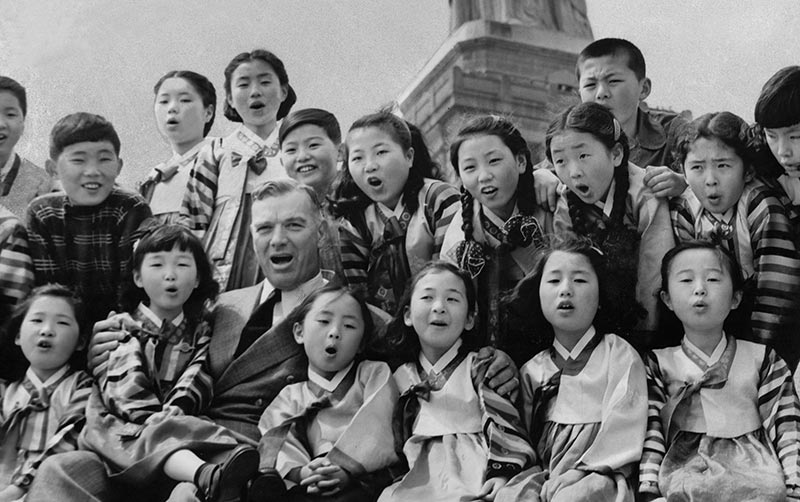
I think it’s interesting how this insurgence occurred through relations between American soldiers and Korean/Japanese women. As a starting point for Asian American history, this period is particularly interesting because it essentially is a starting point for a whole other type of Asian American experience: being biracial. In my family and many other Asian families, “mixing” is looked down upon, and people prefer to keep it within the same race. Yet for the individuals born as both White and Asian, being of such descent inevitably creates a sort of dissonance between you and your two cultures.
For me, while I am 100% Asian, my immigration to the States and my very close ties to both sides of my culture creates a similar effect. My grandparents sometimes comment on my inability to write Chinese. Although typically it’s a lighthearted poke, I sometimes mourn the ability to express myself using Mandarin in the same way I can use English. I feel like I missed out on learning how to do calligraphy in Mandarin, or reading Sun Wu Kong in its original language. In the same sense, although I’m completely fluent in English, there is always a feeling that I’m still a “foreigner” within me. Like author Choy mentioned earlier in the book, erasure of Asian American History combined with numerous other factors led to a general ignorance of Asian American culture. As a result, many of us, like myself, feel alienated from the conversation altogether regarding American history and one’s relation to this country. There is a constant gap between two sides of my identity.